Homemade AMAZAKE- Japanese Home Cooking and Sweets Class in Tokyo
Amazake (amazake) is a traditional Japanese sweet drink made from rice koji and rice, or from sake lees (sake kasu). It is so nutrient-dense that it’s often called “drinkable IV drip.” There are two main types: a non-alcoholic version made from rice koji, and a version with trace alcohol made from sake lees.
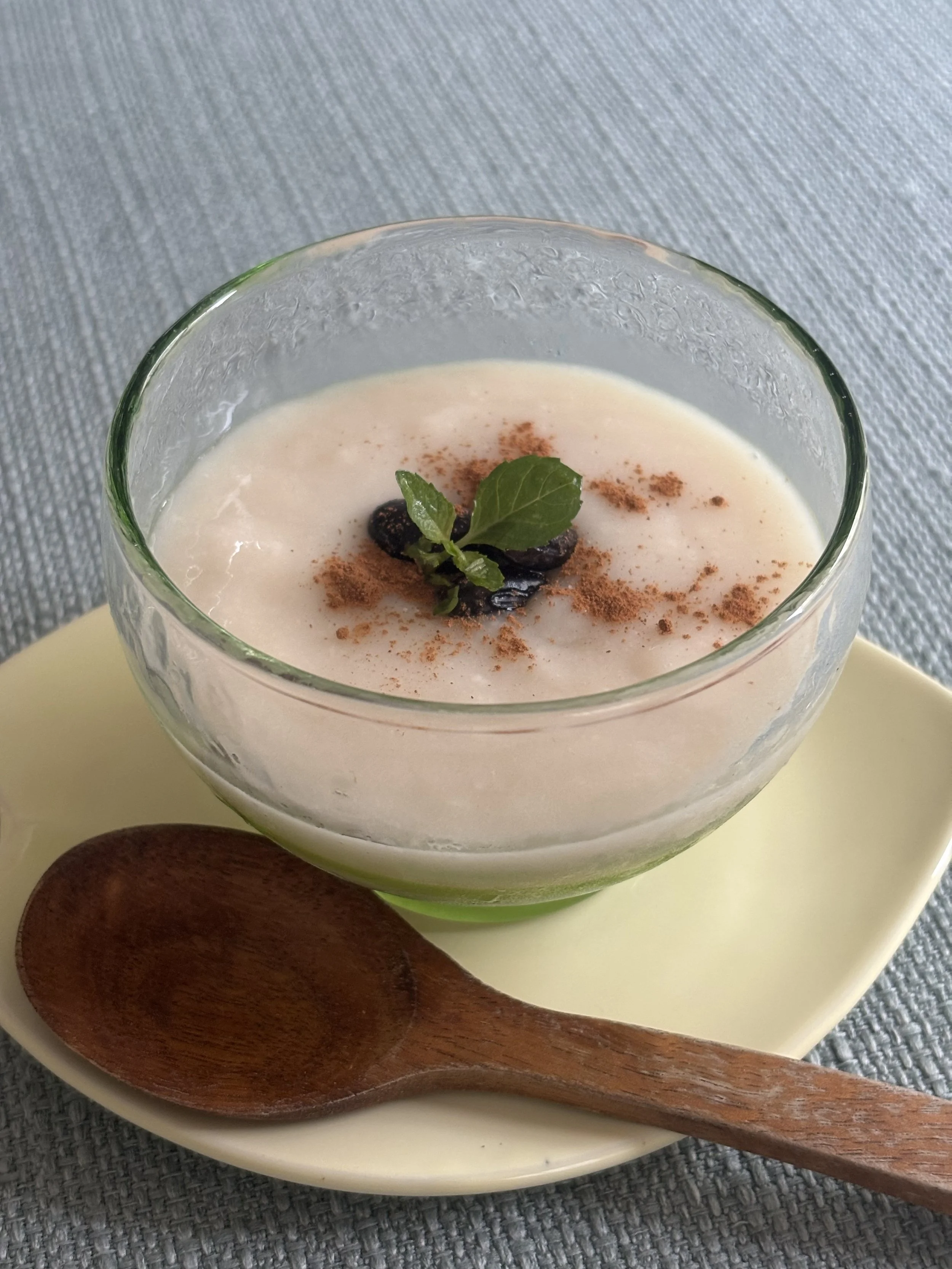
Serve the finished amazake with black beans and cinnamon.-Homemade AMAZAKE- Japanese Home Cooking and Sweets Class in Tokyo
Nutrition and why it’s called “drinkable IV drip”
The enzymes in koji convert rice starch into glucose, which makes up about 20–30% of amazake, providing quick energy.
It contains all nine essential amino acids, plus a rich array of B vitamins (such as B1, B2, and B6).
Fermaitation also produces peptides, organic acids, and other bioactive compounds. Because its nutrient profile resembles that of hospital IV fluids, amazake is nicknamed “drinkable IV drip.”
Ama-zake is an ancient Japanese fermented drink whose origins appear in early-8th-century Nara-period records such as the Nihon Shoki, where proto-forms like “reishu/ko-zake” and “ama-no-tamu-zake” are mentioned in mythic and court-ritual contexts.wikipedia+2
Ancient to medieval period: “Ko-zake” of myth and the court
Kofun to Nara periods: The drink considered the root of amazake, “ama-no-tamu-zake,” appears in the Nihon Shoki (compiled in 720). Accounts describe Konohanasakuya-hime making it from rice and offerings of “ko-zake” to Emperor Ōjin, suggesting it was primarily used in rituals and as a ceremonial offering.wikipedia+2
Heian period: Among aristocrats, chilled amazake was enjoyed in summer as a cooling, nourishing drink. In an era without air conditioning or refrigeration, it was valued as a remedy against summer fatigue.
Name changes: It was originally called “hitoyo-zake/ichiya-zake” (one-night sake) or “ko-sake,” referring to a sweet, quickly saccharified alcoholic drink.wikipedia+1
Edo period: A summer staple for commoners
Street vendors: As commerce flourished in the Edo period, itinerant “amazake sellers” became a common summer sight in towns. The Morisada Man’kō records that amazake was sold mainly in summer months, and it became a seasonal word (kigo) for summer.
Price controls and popularity: The Tokugawa shogunate even capped amazake prices at four mon to keep it affordable for all ages, reflecting how deeply it had entered everyday life.
Expanded uses: From the mid-Edo period onward, amazake was used not only as a beverage but also in cooking, confectionery, and soy-sauce brewing; by the late Edo period, shops began selling it year-round.
Modern era: Spread of sake-lees amazake and the “drinkable IV” boom
Sake-lees amazake: The style commonly served at New Year’s shrines—sake lees dissolved in hot water—became widespread from the Taishō period onward. By contrast, “kōji amazake” made from rice kōji has the older lineage.
Reevaluation as a health drink: Because it contains glucose, amino acids, and B vitamins, amazake has been dubbed a “drinkable IV drip” and is promoted for nutrition and recovery from fatigue.
Note: Two types of amazake
Rice-kōji amazake: Made by adding rice kōji to cooked rice and allowing enzymatic saccharification. It contains almost no alcohol and has a natural sweetness.
Sake-lees amazake: Made by dissolving sake lees in hot water (or water) and sweetening with sugar; it may contain small amounts of alcohol.
Ingredients (makes about 550 ml)
Rice koji: 250g fresh or dried
Water: 400ml heated to 60 ℃
Instructions
Break up the rice koji, add 400 ml of 60°C water, and mix well.
Set the rice cooker to keep-warm mode and keep the lid closed for about 3 hours.
Stir the mixture once or twice during fermentation for more even results.
When it becomes fragrant, sweet, and slightly thick like a paste, it’s ready.
For a smoother texture, blend with a hand blender if desired.
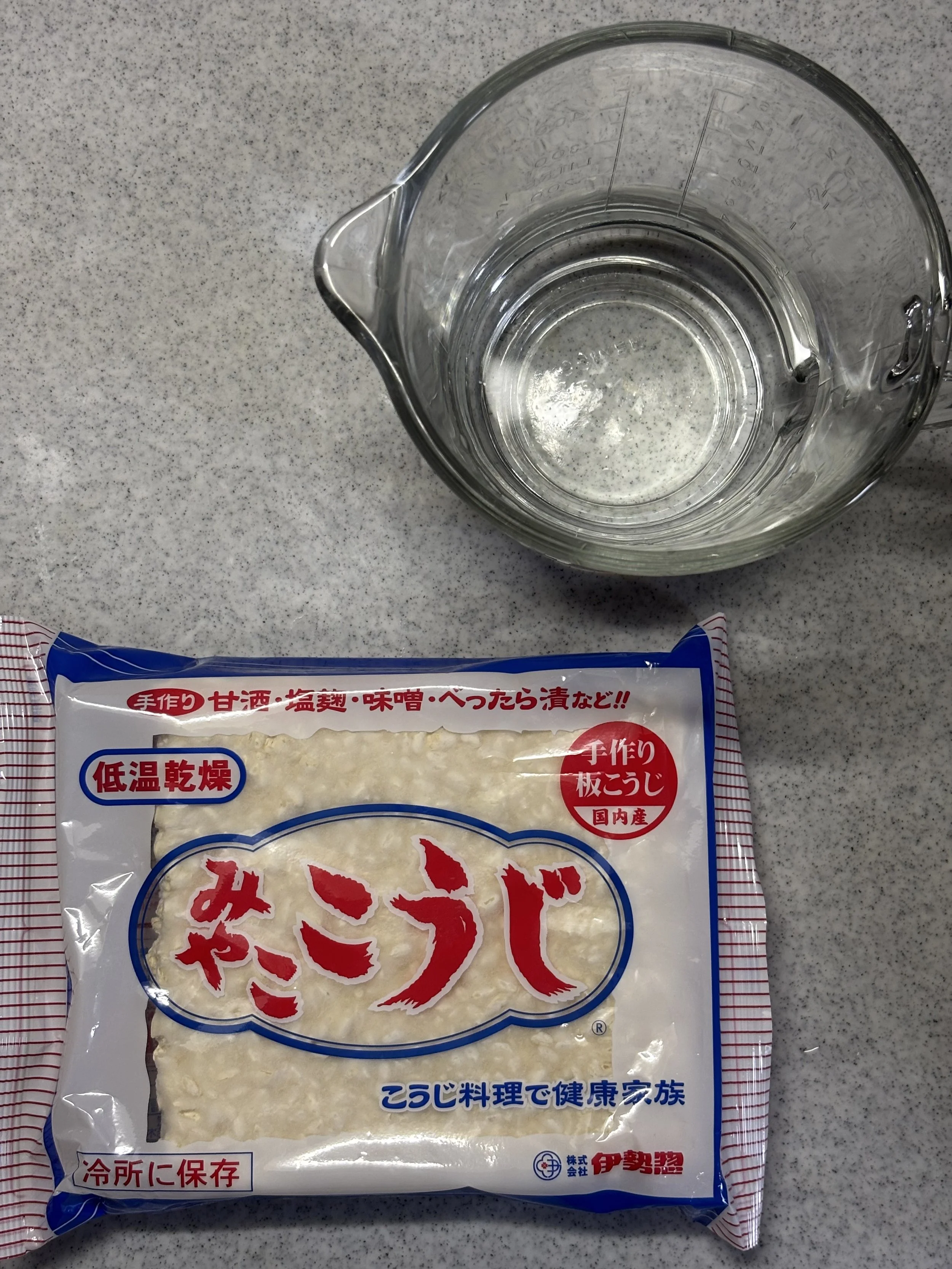
Dried Rice-Kouji and hot water- Homemade AMAZAKE- Japanese Home Cooking and Sweets Class in Tokyo
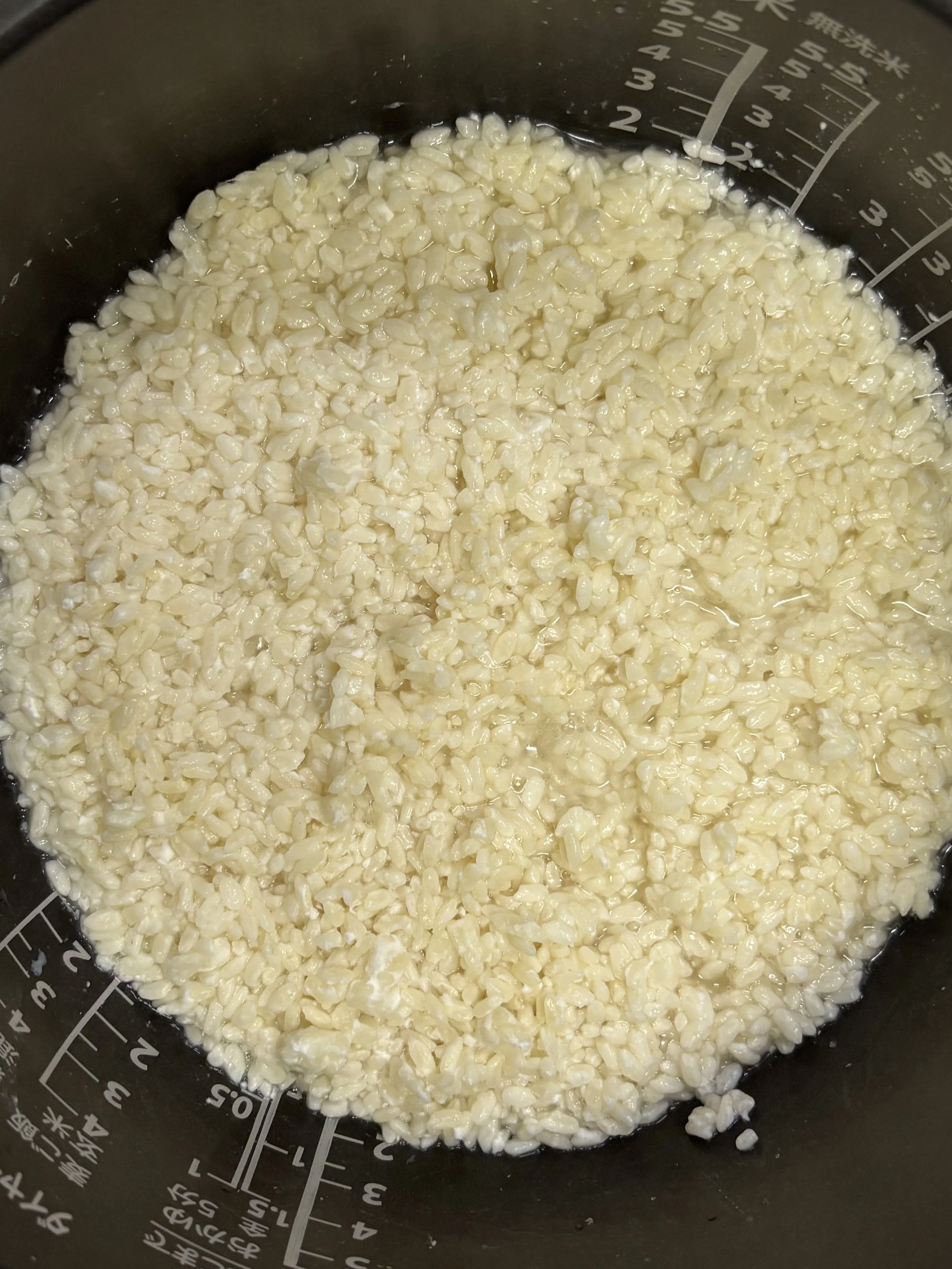
Add dried kōji and water to a rice cooker- Homemade AMAZAKE- Japanese Home Cooking and Sweets Class in Tokyo
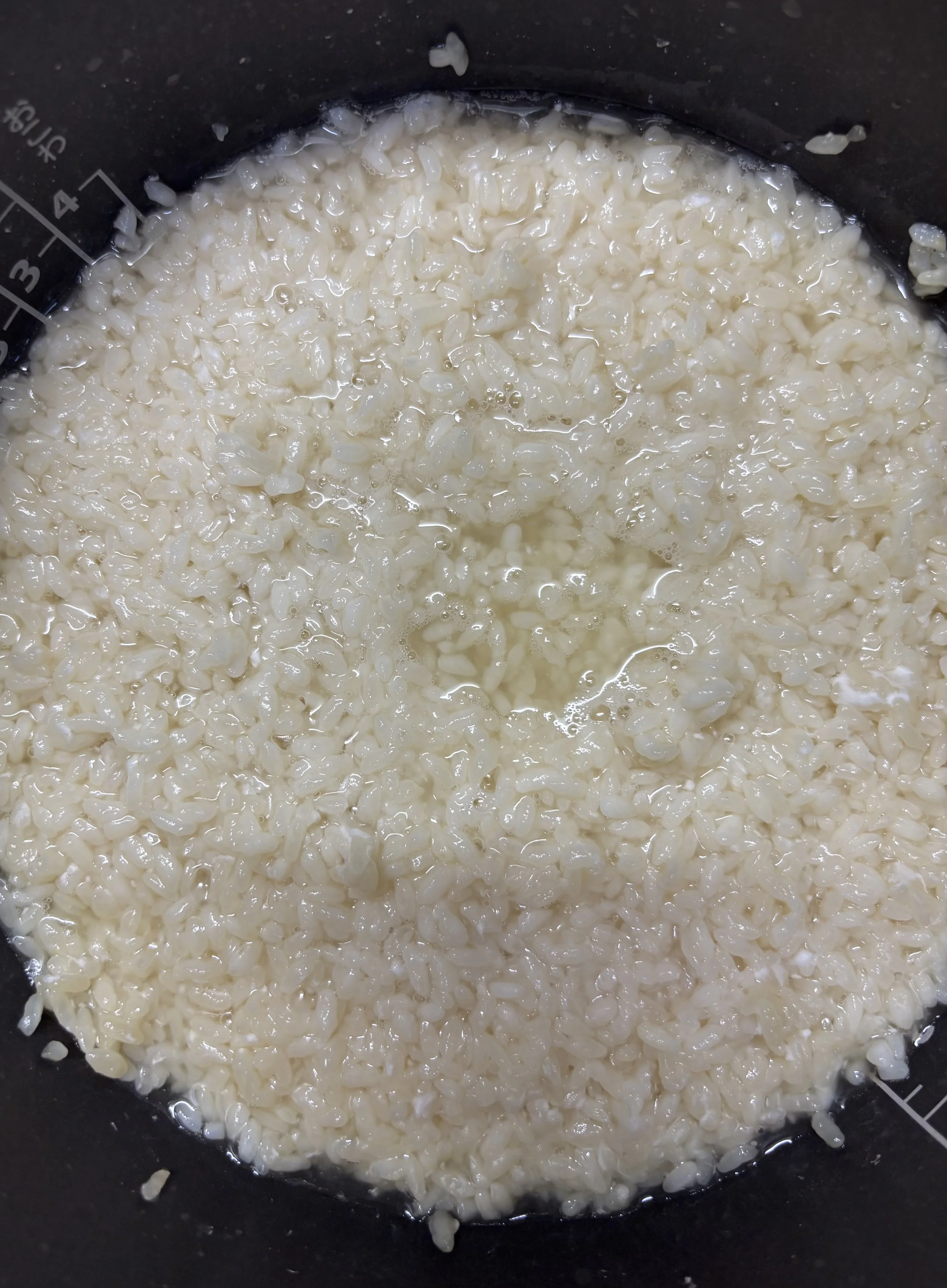
Keep it on the “keep warm” setting- Homemade AMAZAKE- Japanese Home Cooking and Sweets Class in Tokyo
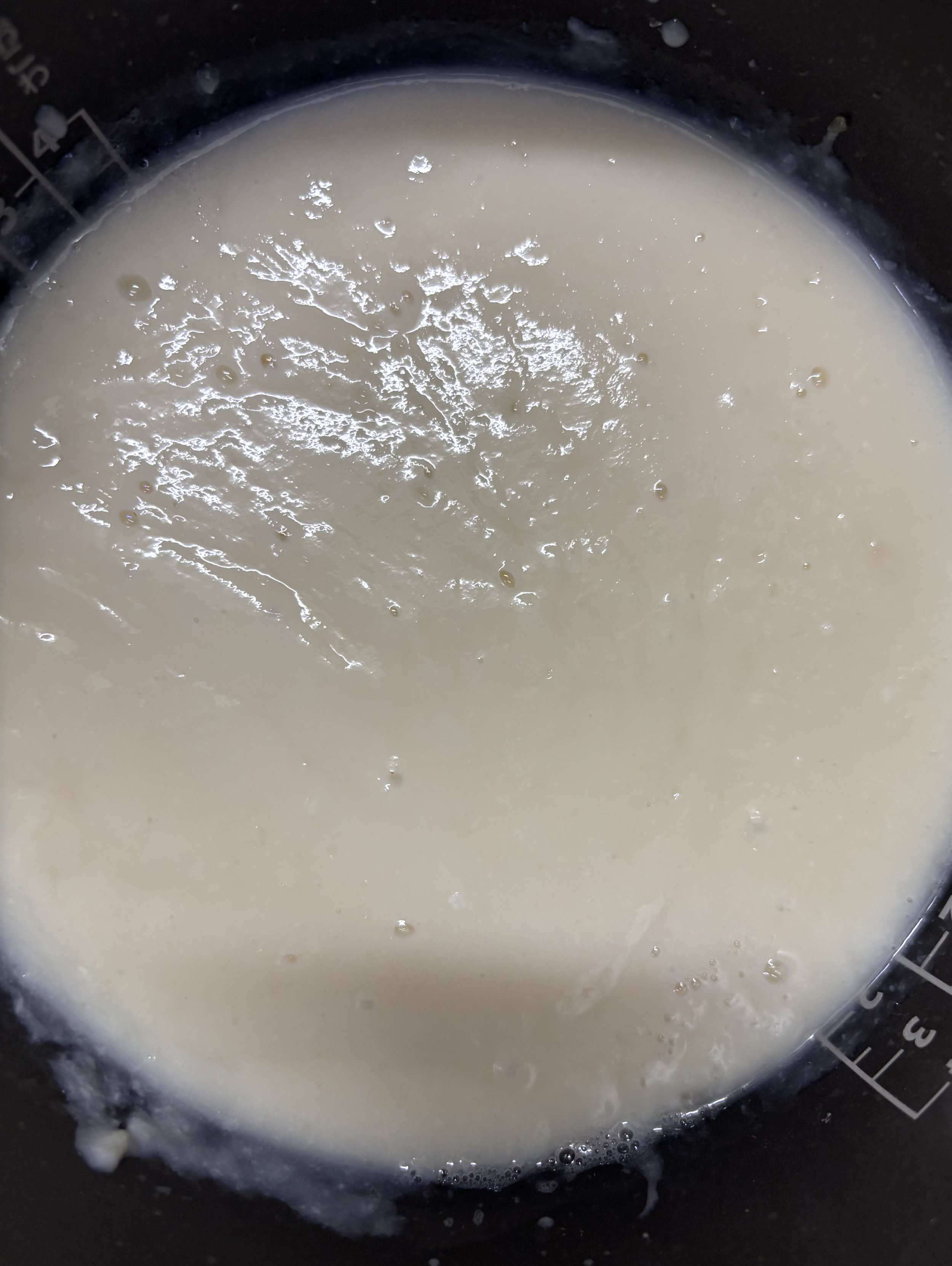
Blend until smooth with a blender.- Homemade AMAZAKE- Japanese Home Cooking and Sweets Class in Tokyo
Storage
Let it cool, then transfer to a clean, airtight container. It keeps for about 1 week in the refrigerator or up to 3 months in the freezer.
How to Enjoy
Drink as is, or dilute with milk or soy milk. It’s also delicious in ginger tea, smoothies, or over granola.
Use it as a natural sweetener in simmered dishes or sauces.
Amazake is so nutritious it’s called a “drinkable IV drip,” but because it’s high in sugar and calories, please be careful not to drink too much—aim for about 100–200 ml per day.
Please book from here.