Wajima-nuri(Traditional Japanese lacquerware)-Japanese Home Cooking and Sweets Class in Tokyo
Wajima-nuri is a traditional lacquerware produced in Wajima City, Ishikawa Prefecture, known for its durability and beautiful luster.
History
It originated in the Muromachi period (around 1524), with the vermilion-painted doors of Shoso Shrine as the oldest surviving example. During the Edo period, it was favored by wealthy farmers and merchants, and today, its techniques are preserved at places like the Wajima Lacquerware Hall.
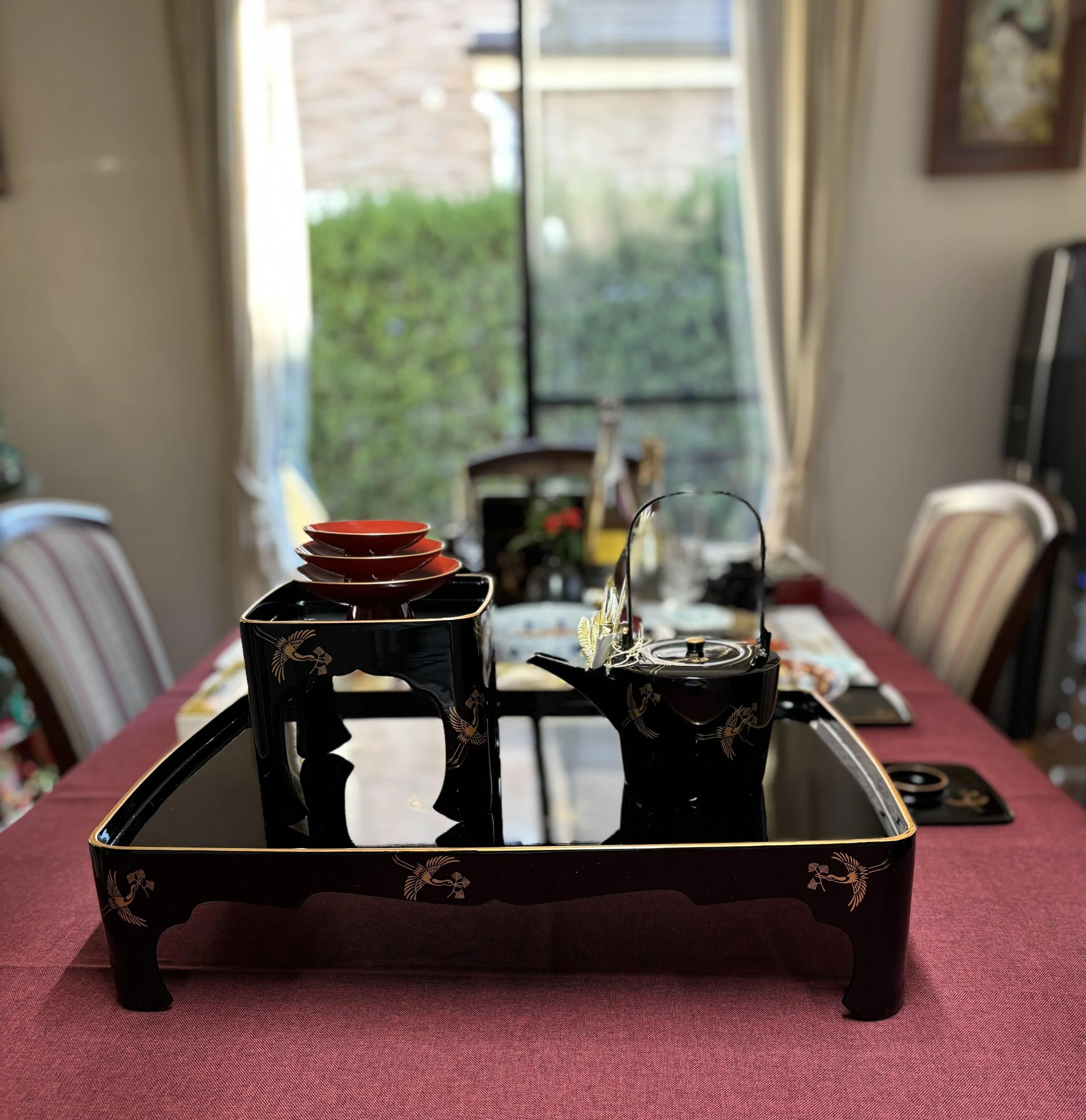
Wajima-nuri otoso-ki is a traditional Japanese lacquerware item, particularly used as an auspicious sake set for New Year's celebrations and rituals. Produced in Wajima City, Ishikawa Prefecture, Wajima lacquerware is characterized by its durability and beautiful luster, typically consisting of a choko (sake pitcher), cups (about three), saucer stands, and a tray- Japanese Home Cooking and Sweets Class in Tokyo
Features
Wajima's unique "ji-no-ko" (powder made by firing diatomaceous earth) is mixed with raw lacquer to create a thick undercoat, enhancing durability. It excels in insulation and antibacterial properties, making it ideal for everyday use with its robust strength.
Production Process
It involves over 20 steps and 75–124 manual operations by artisans. The wood base is reinforced with cloth, followed by undercoating, topcoating (such as nusshi or roiro), and polishing repeated multiple times.
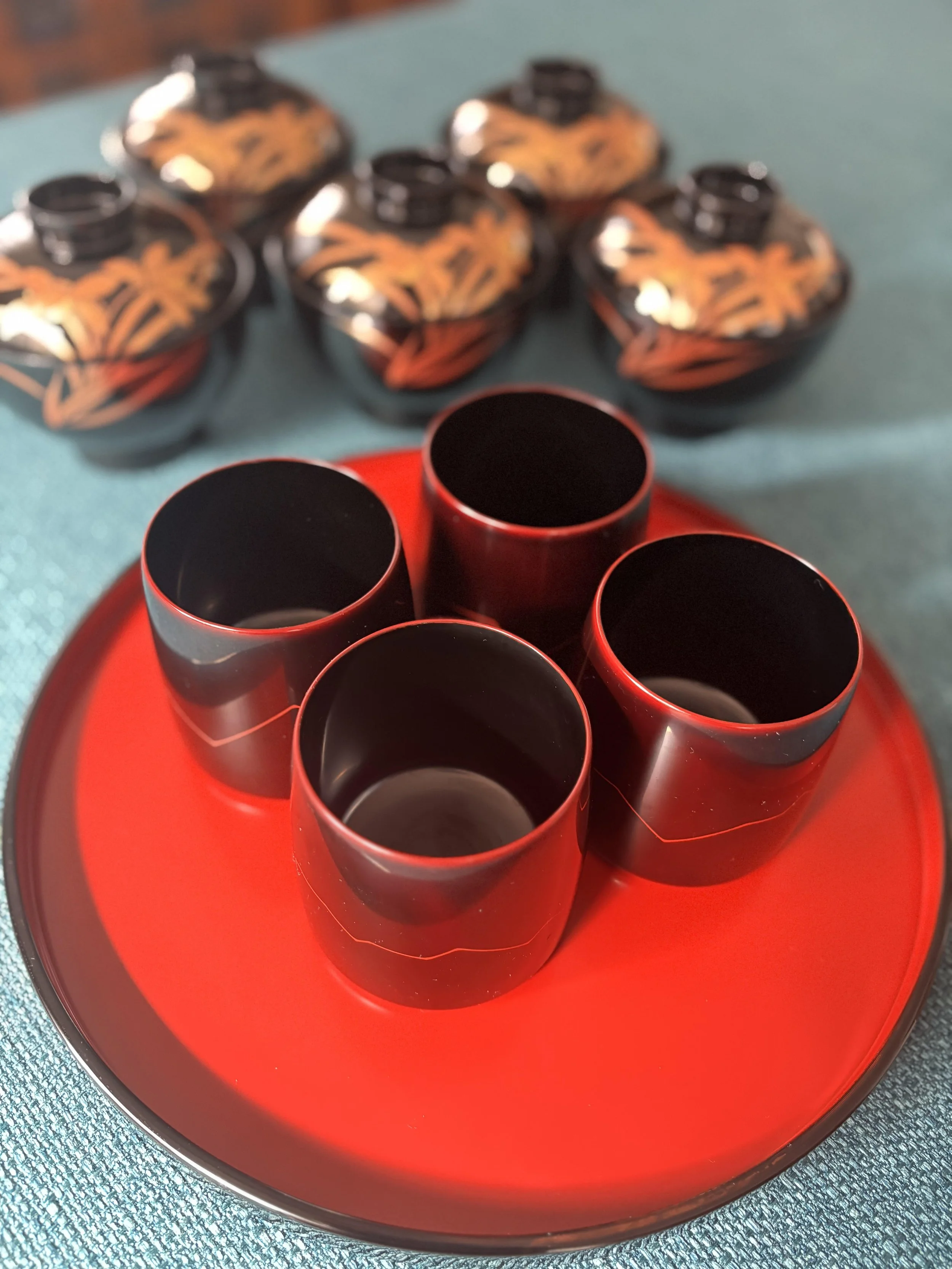
Wajima lacquerware teacup- Japanese Home Cooking and Sweets Class in Tokyo
Usage Examples
Typical items include bowls, tiered boxes, trays, chopsticks, saucers, and teacups, ranging from daily tableware to gifts. It has gained attention in the reconstruction efforts after the Noto Peninsula Earthquake.
Detailed Production Steps
Wajima-nuri is a traditional Japanese lacquerware from Wajima City, Ishikawa Prefecture, characterized by about 124 manual steps divided into wood base preparation, undercoating, topcoating, and decoration, taking several months to years.
Wood Base Preparation
High-quality timber is selected and naturally dried for over 5 years, then shaped using a lathe or plane. The raw wood is dried on the ground for 2–3 years, bark removed, moisture content adjusted for strength, repaired with carving or hemp insertion, and smoothed flat.
Undercoating
Cloth is applied to the wood base for reinforcement, and undercoat lacquer mixed with Wajima's "ji-no-ko" (diatomaceous earth) is repeatedly applied. Using progressively finer powders (one-side, two-side, three-side), each layer is polished with whetstone, taking 3–6 months to create a smooth, solid foundation. Edge finishing and rust lacquer repairs are followed by kokera-moji polishing.
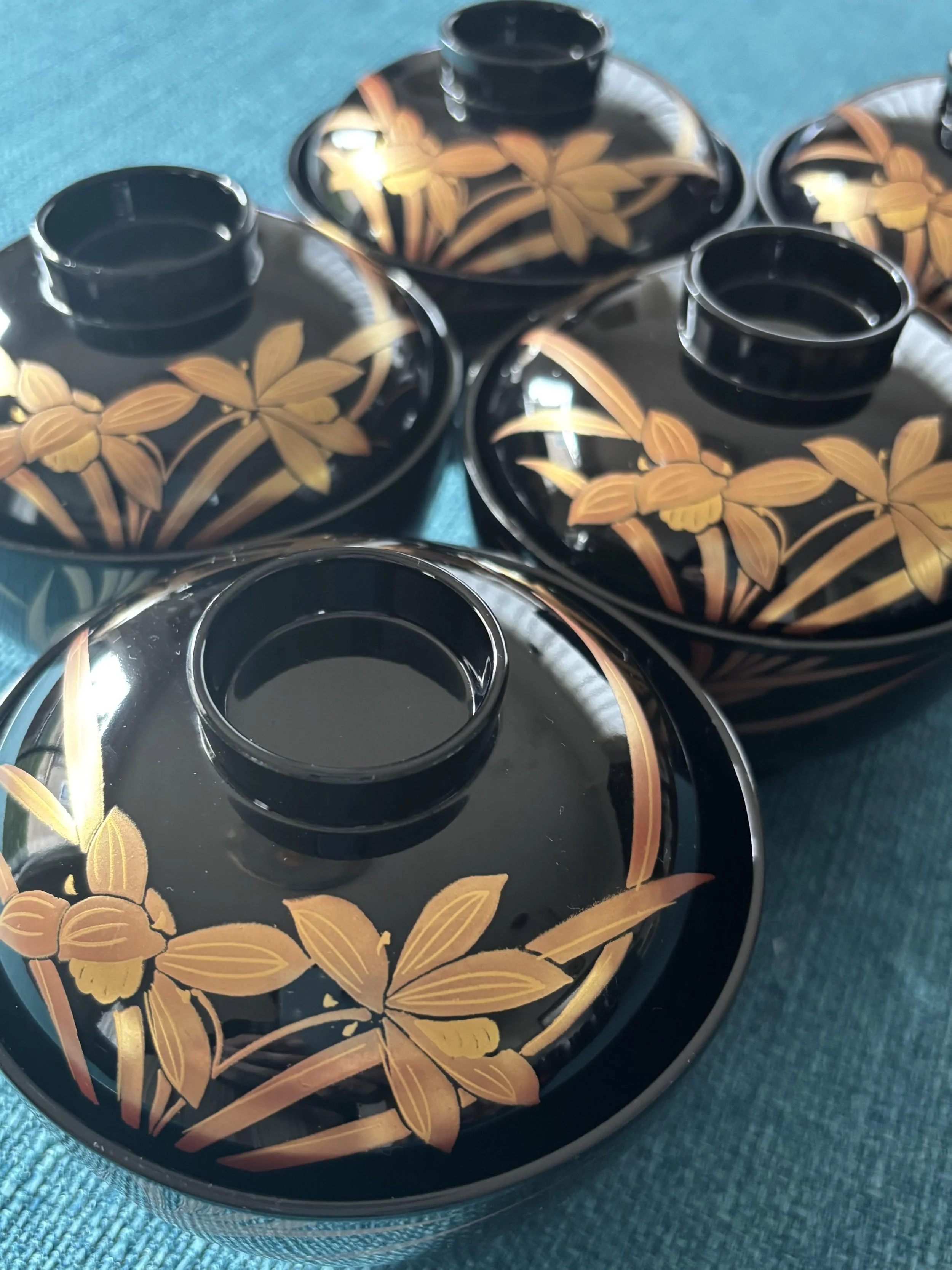
Wajima-nuri bowls are traditional Japanese lacquerware bowls crafted in Wajima City, Ishikawa Prefecture, known for their exceptional durability, glossy finish from multiple layers of natural lacquer, and elegant designs.- Japanese Home Cooking and Sweets Class in Tokyo
Topcoating
Rust lacquer is applied as a mid-coat and polished repeatedly, then main baked lacquer or roiro is carefully applied. It dries at 25°C and 65% humidity, with water polishing or wipe-finishing to remove dust, and the surface is meticulously smoothed without hand contact, repeated several times.
Representative Products and Uses
Representative Products
Bowls and soup bowls: Wajima-nuri staples, sturdy for daily use like couple's sets.
Individual plates, saucers, and candy bowls: Used at meals or tea ceremonies, adorned with chinkin or makie.
Chopsticks, sake cups, tiered boxes: Popular gifts with modern designs.
Fountain pens and cups: Modern applications, including JAL originals.
Main Uses
Wajima-nuri is widely used as tableware and tea utensils due to its high insulation and antibacterial properties, perfect for daily use. It also serves as interior decor, furniture (low tables, screens), and gifts, designed for long-term use with repairs.
Care and Repair Methods
Wajima-nuri care is simple for daily use, maintaining beauty and longevity with a soft sponge and neutral detergent while following precautions.
Daily Care
After use, gently wash with a soft sponge lathered in neutral detergent, rinse with lukewarm water, and wipe dry with a cloth towel, especially the base and edges. For new items, place in a rice storage bin to remove odor.
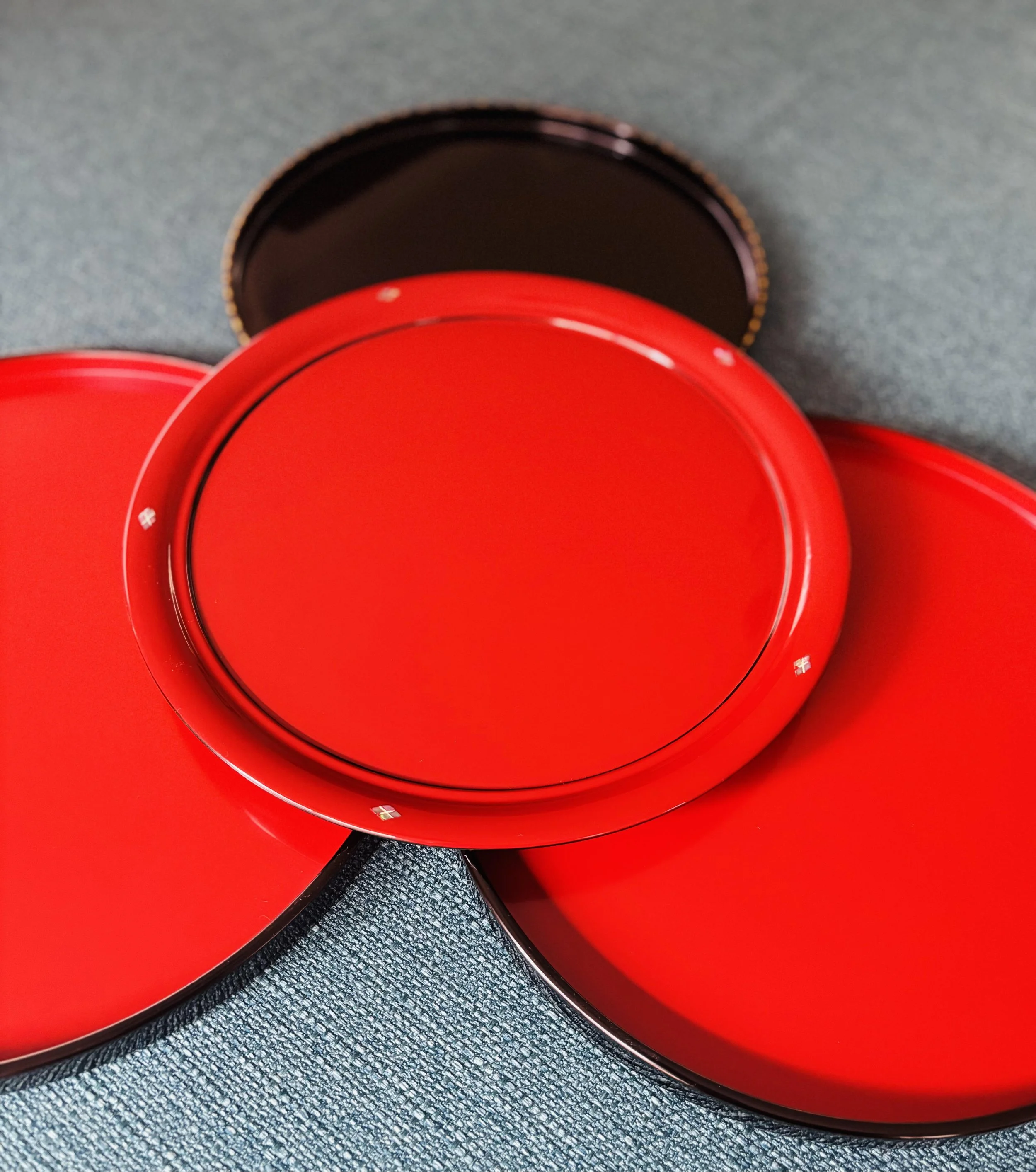
Wajima-nuri trays are traditional Japanese lacquerware trays from Wajima City, Ishikawa Prefecture.- Japanese Home Cooking and Sweets Class in Tokyo
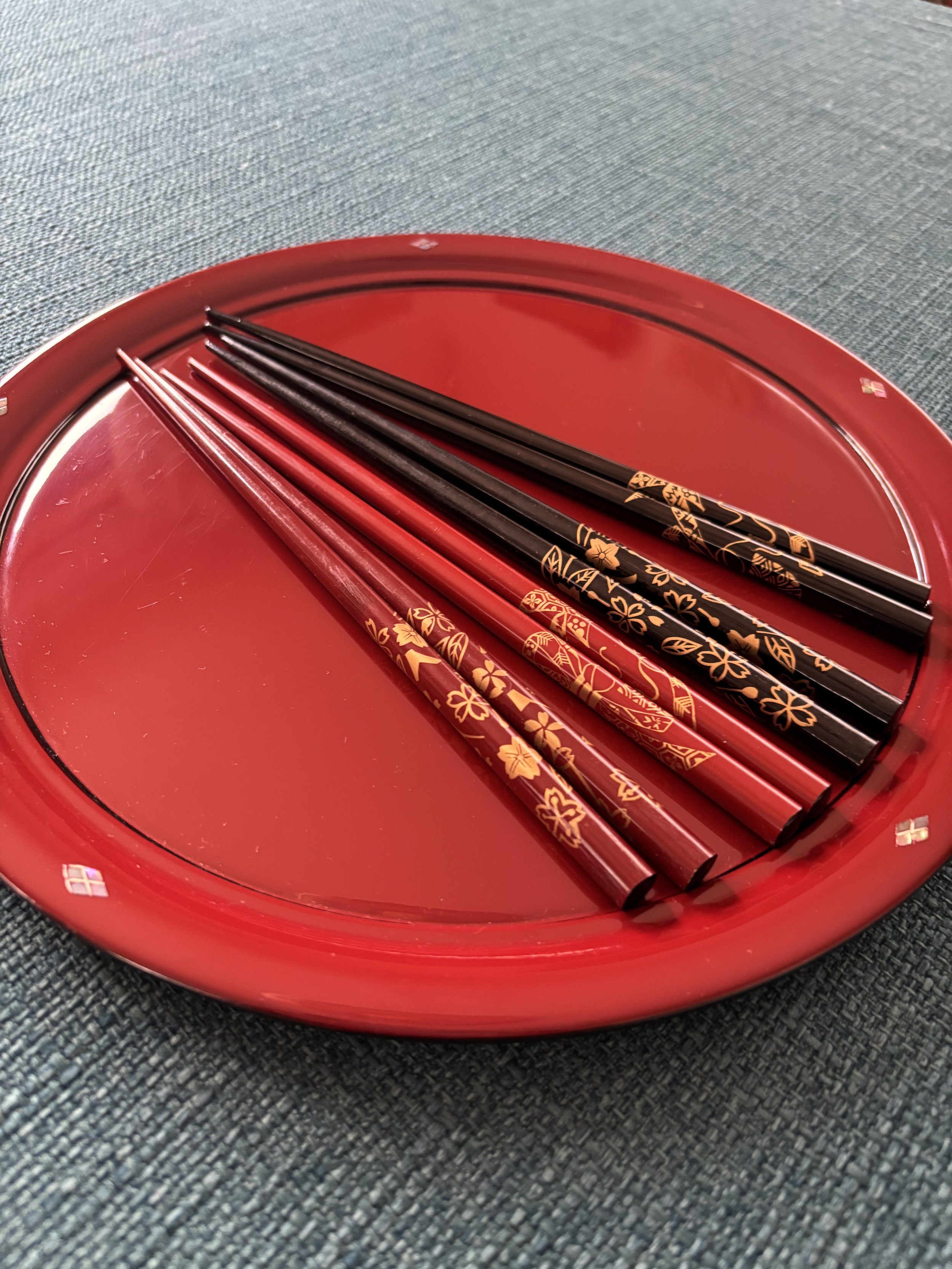
Wajima-nuri chopsticks- Japanese Home Cooking and Sweets Class in Tokyo
Precautions
Never use microwaves, dishwashers, or drying machines; avoid hot foods, direct sunlight, or extreme dryness. Do not wash with glassware, use cleansers, or hard brushes. Daily use enhances luster.
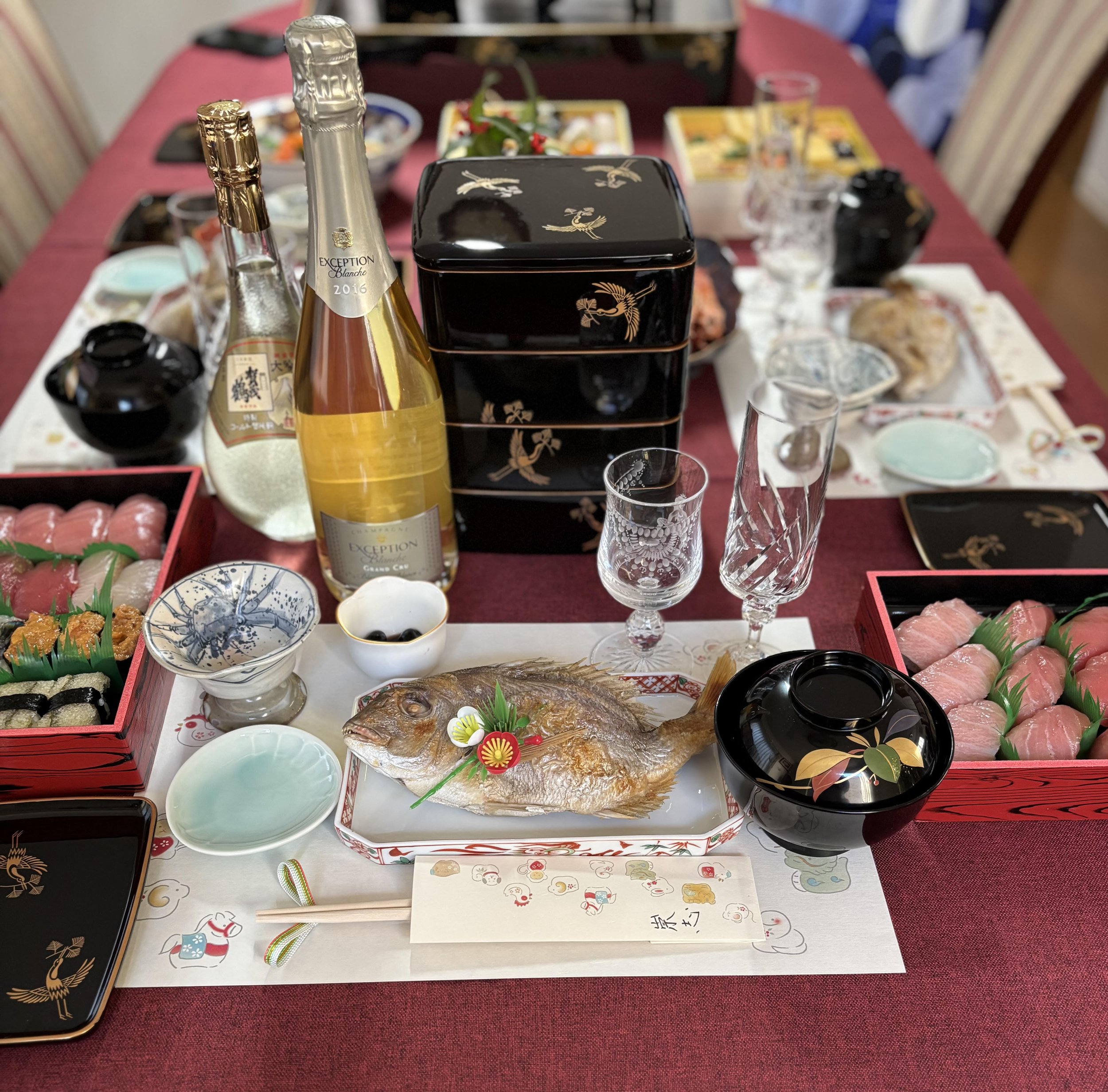
Osechi cuisine and Wajima-nuri lacquerware.
Translation Notesー”Osechi-ryori" (or simply "Osechi") refers to traditional Japanese New Year's dishes packed in lacquered boxes, symbolizing good fortune.- Japanese Home Cooking and Sweets Class in Tokyo
Storage
Store upright in a shaded, well-ventilated area without stacking. For long-term, dry thoroughly, box it, and air-dry in shade once a year.
Repair Methods
For chips or peeling, consult Wajima-nuri specialists or repair workshops for repainting or restoration to like-new condition. Early consultation prevents further damage.
The appeal of Wajima-nuri lies in its exceptional durability and artistic beauty. This traditional lacquerware, produced in Wajima City, Ishikawa Prefecture, uses local diatomaceous earth called "ji no ko" as the base, and artisans handcraft it through over 100 processes, achieving both strength and elegance.
Please book from here.↓
https://www.byfood.com/experiences/fluffy-pancake-making-class-tokyo-1170