A trip to Hakodate Day 1-Japanese home cooking and sweets class in Tokyo
For a one-night, two-day sightseeing trip to Hakodate, the itinerary—"Morning Market → Goryokaku → Motomachi/Bay Area → Hakodate Mountain Night View"—offers a compact way to hit the key highlights efficiently.
Day 1 Morning: Morning Market and Seafood Breakfast
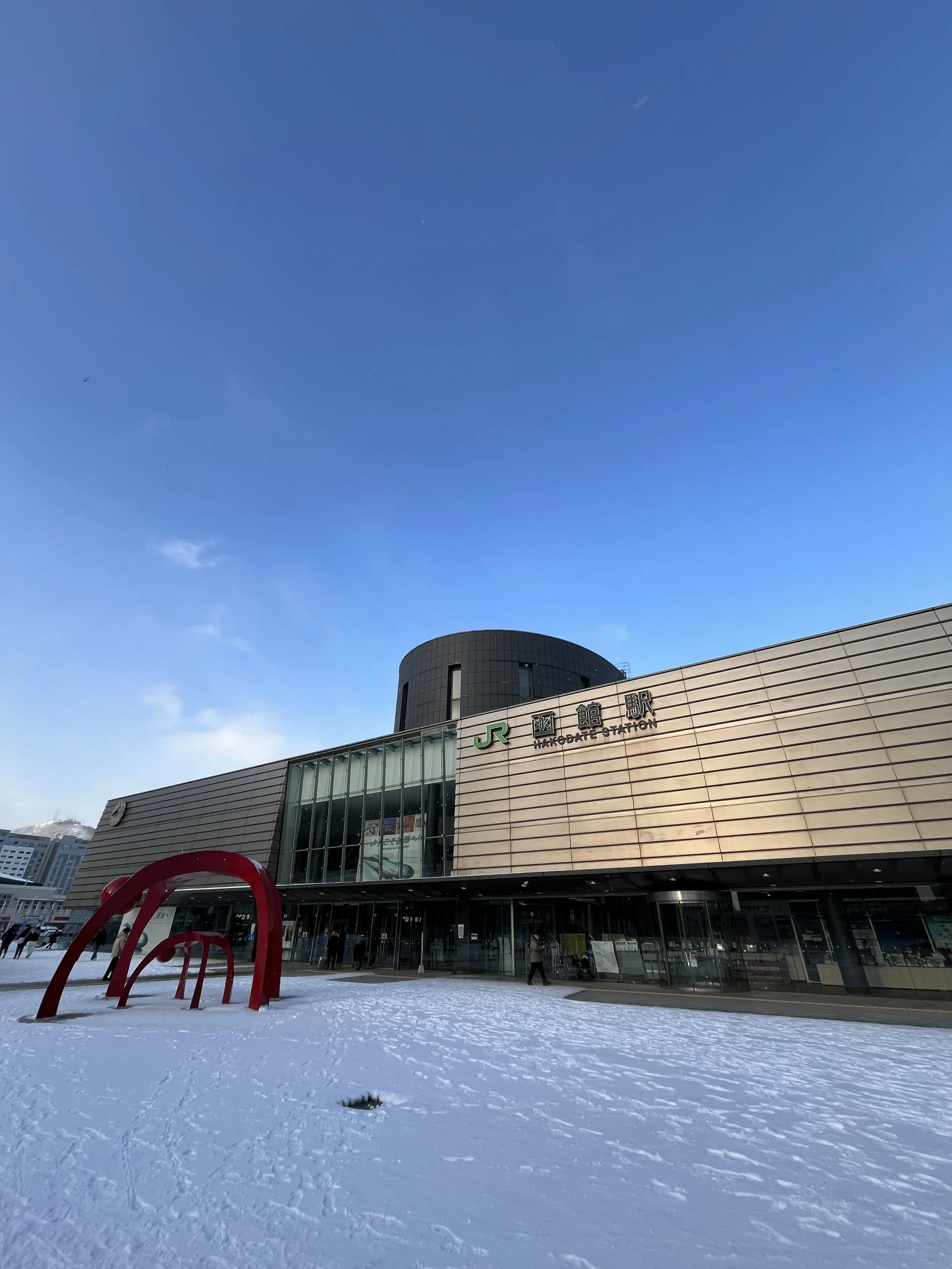
JR HAKODATE station- Japanese Home Cooking and Sweets Class in Tokyo
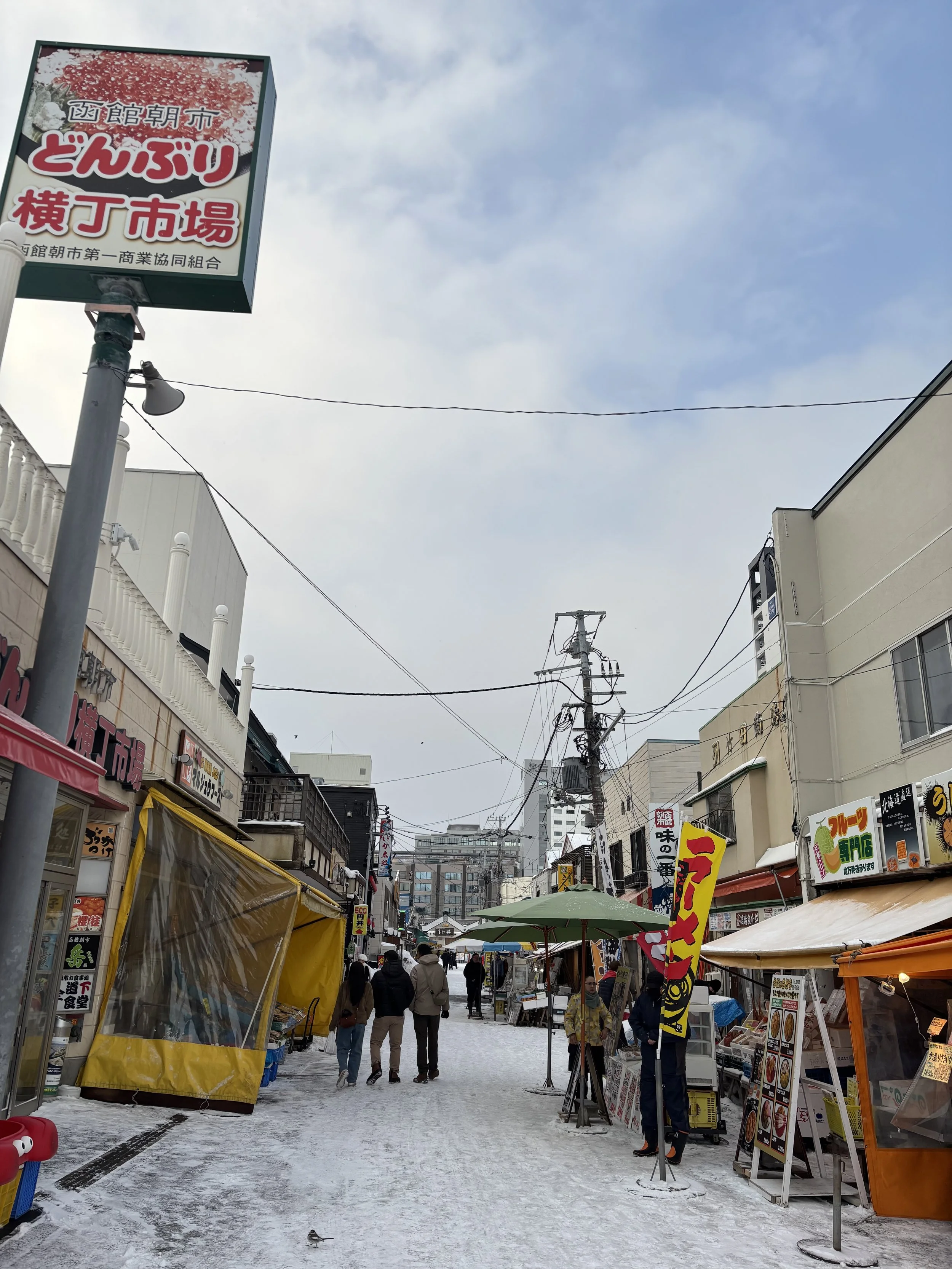
We can enjoy a hearty Hokkaido-style seafood breakfast, such as seafood rice bowls or grilled fish sets. Shopping for dried goods and fresh produce is also available.- Japanese Home Cooking and Sweets Class in Tokyo
7:00–8:30 a.m.
Explore the Hakodate Morning Market near JR Hakodate Station while enjoying breakfast. It's just a 3-minute walk from the station to spots like "Hakodate Asaichi Donburi Yokocho Market" or "Ekini Market."
Savor Hokkaido-style seafood breakfasts such as live squid sashimi, seafood rice bowls, or grilled fish sets.Around 9:00 a.m.
Browse the market's souvenir stalls for dried goods, kelp, and local delicacies before heading out.
Day 1 Late Morning: Goryokaku Area
9:30–11:30 a.m.
From Hakodate Station, take the city tram to "Goryokaku Koen Mae" (1-day tram pass available for ¥800/adult). I drove here from the airport via rental car.
Visit Goryokaku Park and Goryokaku Tower, where the 107-meter-high observation deck offers stunning views of the star-shaped fortress below.
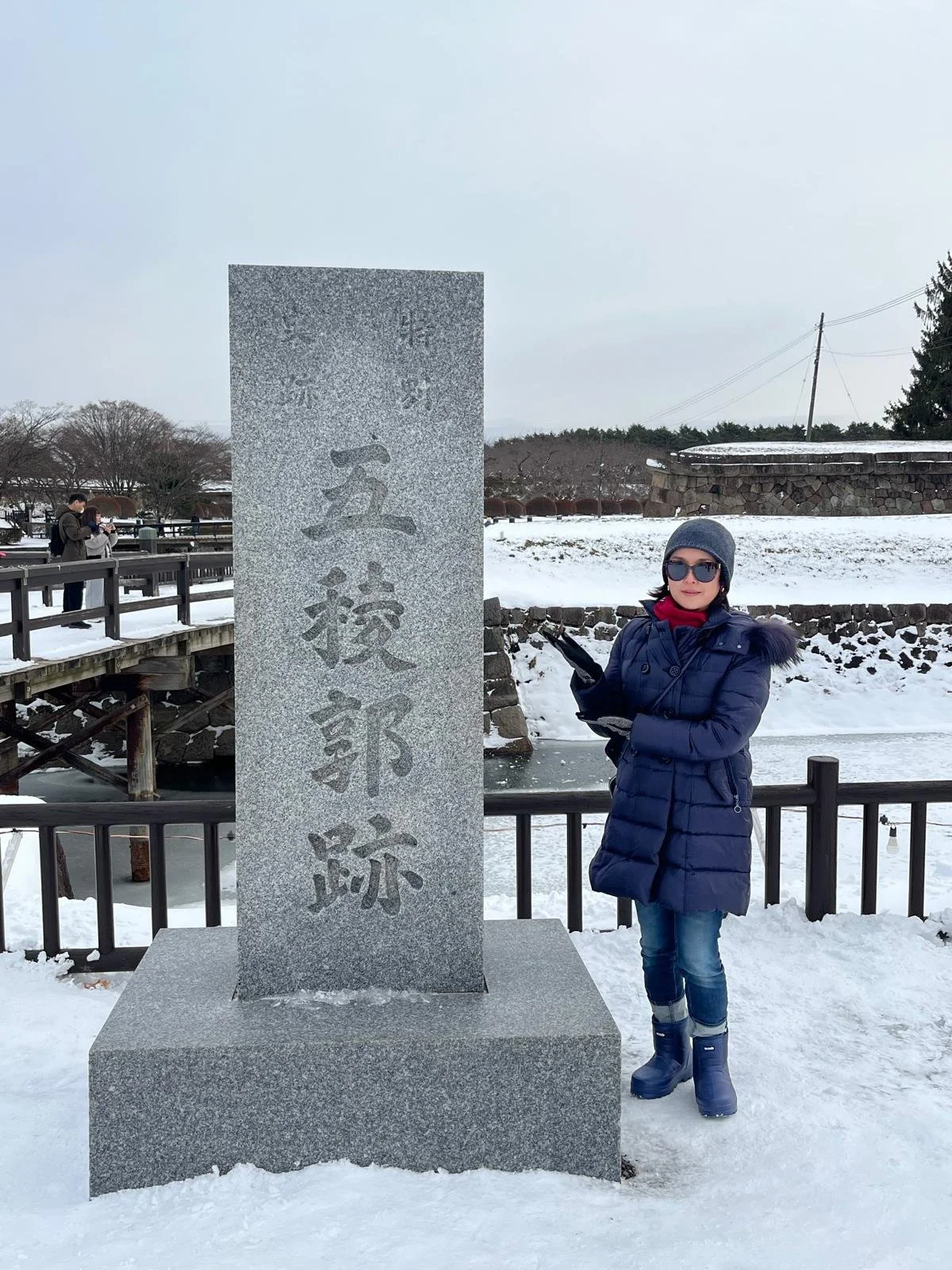
Goryokaku with Tomokita- Japanese Home Cooking and Sweets Class in Tokyo
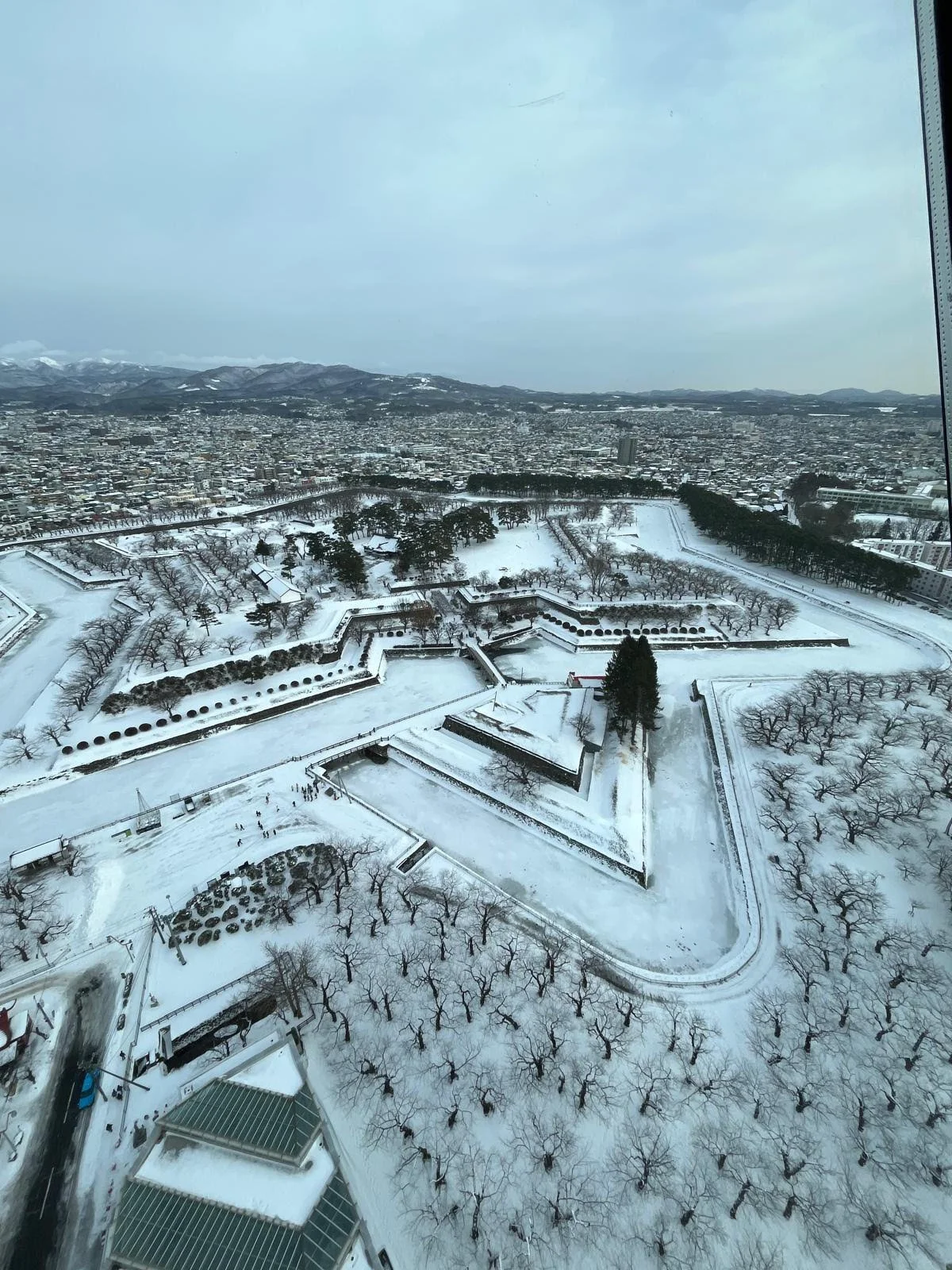
Goryokaku: Japan's First Western-Style Star Fort
Goryokaku is located in Hakodate, Hokkaido, and represents Japan's first Western-style fortress built by the Edo Shogunate in the late Bakumatsu period to defend Hakodate Port. Completed in 1866, it played key roles in subsequent historical events and now serves as Hakodate's premier tourist site and cherry blossom destination.
History and Architectural Background
Construction Context
Goryokaku's construction occurred during Japan's major 19th-century transformation. The 1853 arrival of Perry ended Japan's isolationist policy, leading to the 1854 Treaty of Peace and Amity that opened Hakodate Port to international trade. Recognizing Hokkaido's defense needs, the Shogunate decided to relocate the Hakodate Magistrate's Office and build the star-shaped fort simultaneously.
Design and Concept
Dutch scholar Takeda Tetsusaburo (1827-1880) designed Goryokaku. Drawing from 15th-century European star fort concepts and French military technology, he developed defenses against cannon and rifle fire. Construction spanned 1857 to 1866, about nine years.
Architectural Features
Star Shape Functionality
The pentagonal star shape defines Goryokaku, with bastions at each point enabling overlapping fire coverage and minimizing blind spots. Prioritizing modern artillery defense, it omitted traditional high keeps found in earlier Japanese castles.
Earthworks and Stone Walls
Earth ramparts used rammed earth construction, while stone walls came from andesite quarried at nearby Tatewaki Cape. Some walls feature overhanging sections to deter invaders.
Hakodate Magistrate's Office
The central Hakodate Magistrate's Office began construction in 1862 and nearly completed by 1864, serving as Ezo's political hub. Timber was processed in Akita and shipped for assembly.
Historical Turning Point: Boshin War and Battle of Hakodate
Ezo Republic and Final Stand
Just three years after completion, the 1868 fall of the Tokugawa Shogunate led to the short-lived Ezo Republic in 1869, with Goryokaku as its capital. Former Shogunate forces under Enomoto Takeaki occupied it for final resistance against the new government army.
The Battle of Hakodate, the Boshin War's endgame, unfolded from June 20-27, 1869.
Post-War Changes
Most structures were demolished post-war due to Tokugawa ties. The moats later supplied ice harvested as "Goryokaku Ice" sold to Honshu.
Modern Goryokaku Park
Historic Site Designation and Park Development
Park development began in 1914, with special historic site status in 1952. It now hosts about 1,500 cherry trees, making it one of Hokkaido's top sakura spots.
Key Tourist Facilities
The 2006 Goryokaku Tower offers 90m and 86m observation decks for star fort views, reaching Tsugaru Strait on clear days.
Day 1 Afternoon: Motomachi and Bay Area Stroll + Rokka-tei Cafe
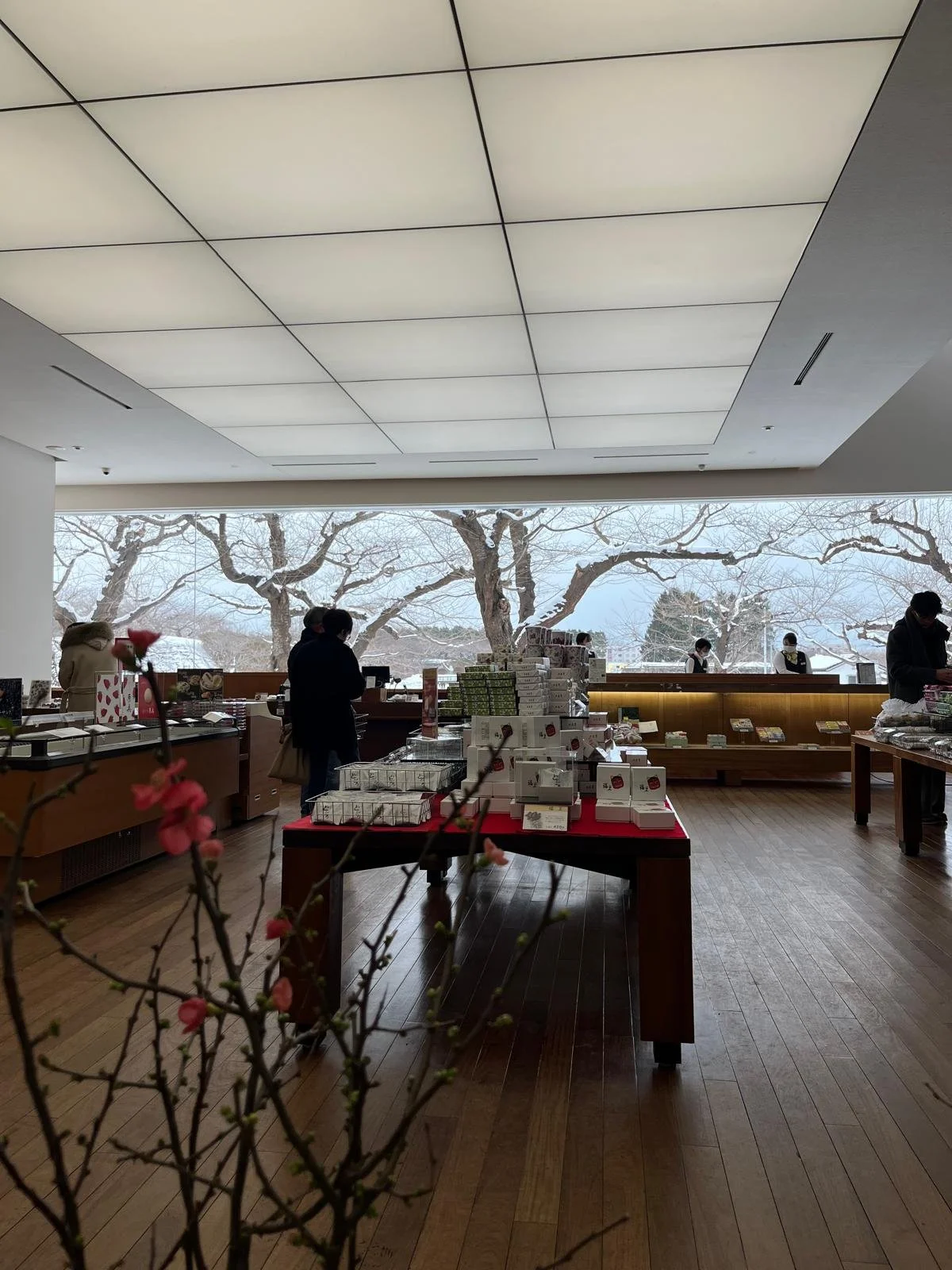
Rokkatei cafe
12:00–2:30 p.m.
Tram to "Jujigai" or "Suehirocho" stops.
Wander the Kanemori Red Brick Warehouse area for lunch, cafes, and shopping—perfect for souvenirs like seafood or sweets. Stop at Rokka-tei Cafe for their famous treats.2:30–4:30 p.m.
Stroll Motomachi on foot:Yachizaka Slope: A popular photo spot framing the harbor and Mt. Hakodate ahead.
Motomachi Park: A small green space overlooking the port and cityscape.
If time allows, check out Western-style architecture like the Old Hakodate Public Hall.
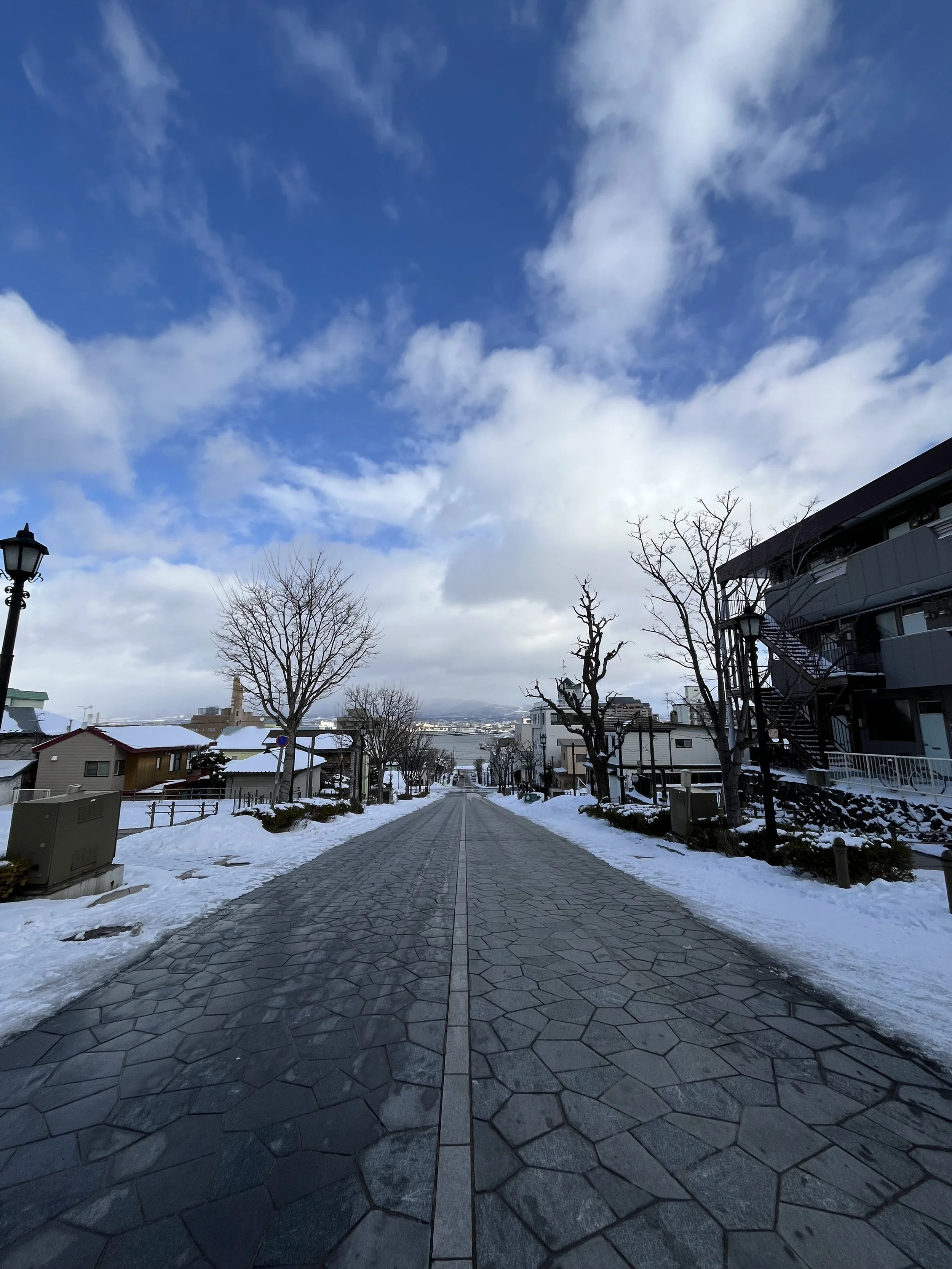
Yachizaka Slope
A popular photo spot offering stunning views of the harbor and Mt. Hakodate straight ahead.
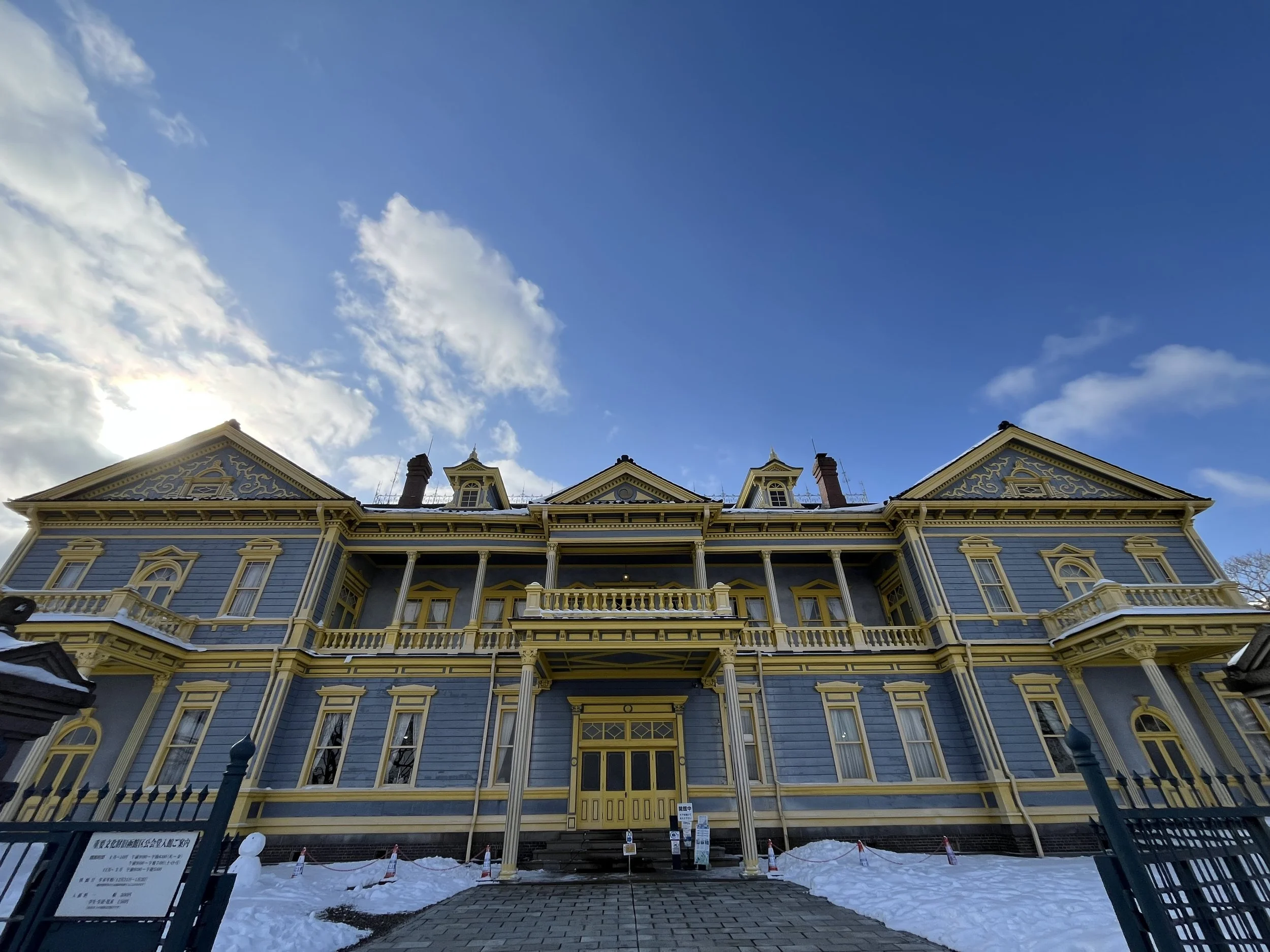
Old Hakodate Public Hall
A historic Western-style building constructed in 1910, featuring preserved interiors and a balcony overlooking the port.
Day 1 Evening: Hakodate Mountain Night View (Canceled Due to Snow)
5:00–8:00 p.m. (Planned)
Originally headed to Mt. Hakodate via tram or bus from nearby stops for the "million-dollar night view," but skipped due to snow.
Instead, checked into a hotel in Yunokawa Onsen for the night—relaxing hot springs after a full day.
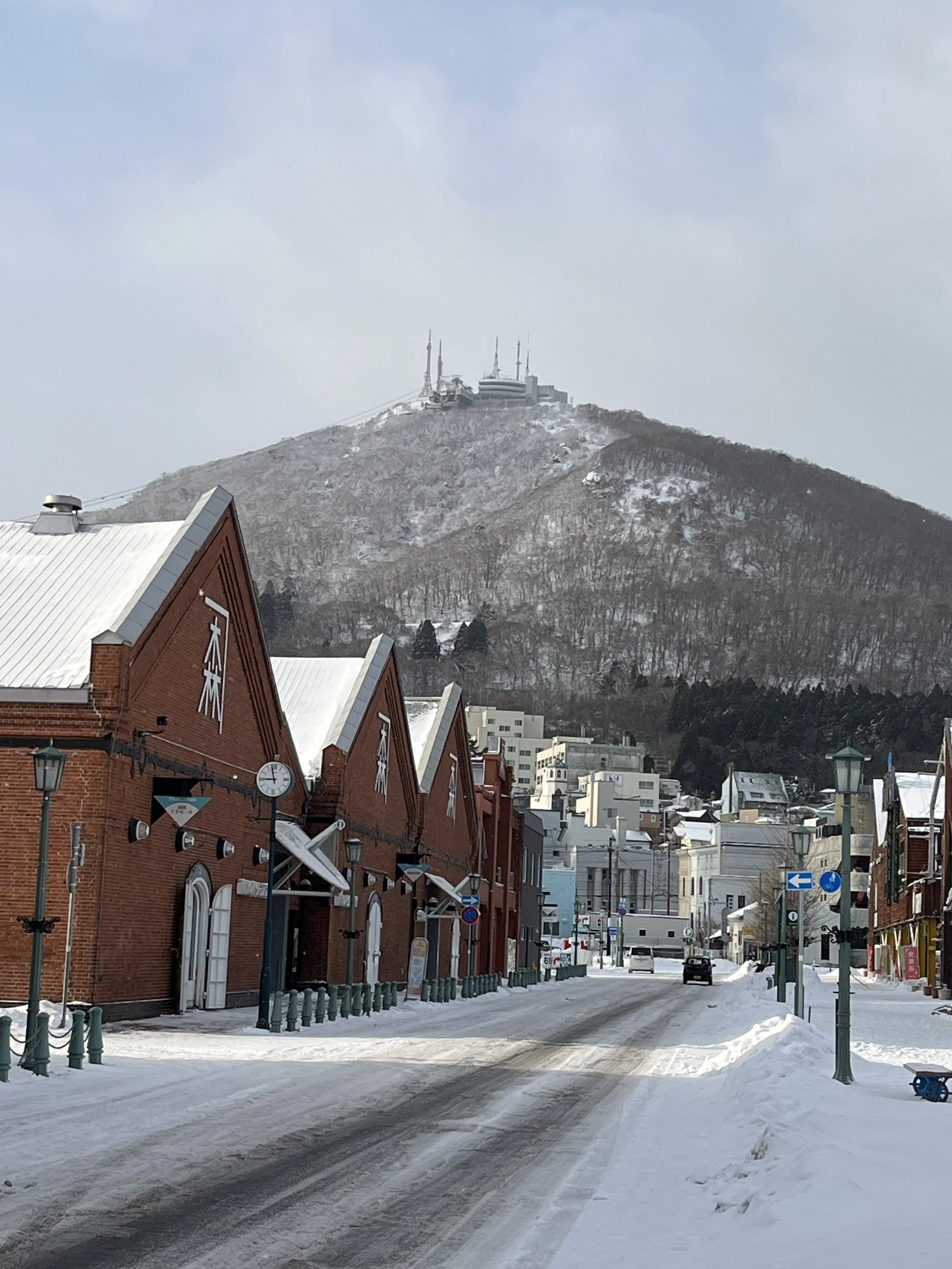
Kanemori Red Brick Warehouses
A charming waterfront complex of historic red brick buildings, perfect for casual strolling, shopping for local souvenirs like seafood treats and sweets, and grabbing a bite to eat.
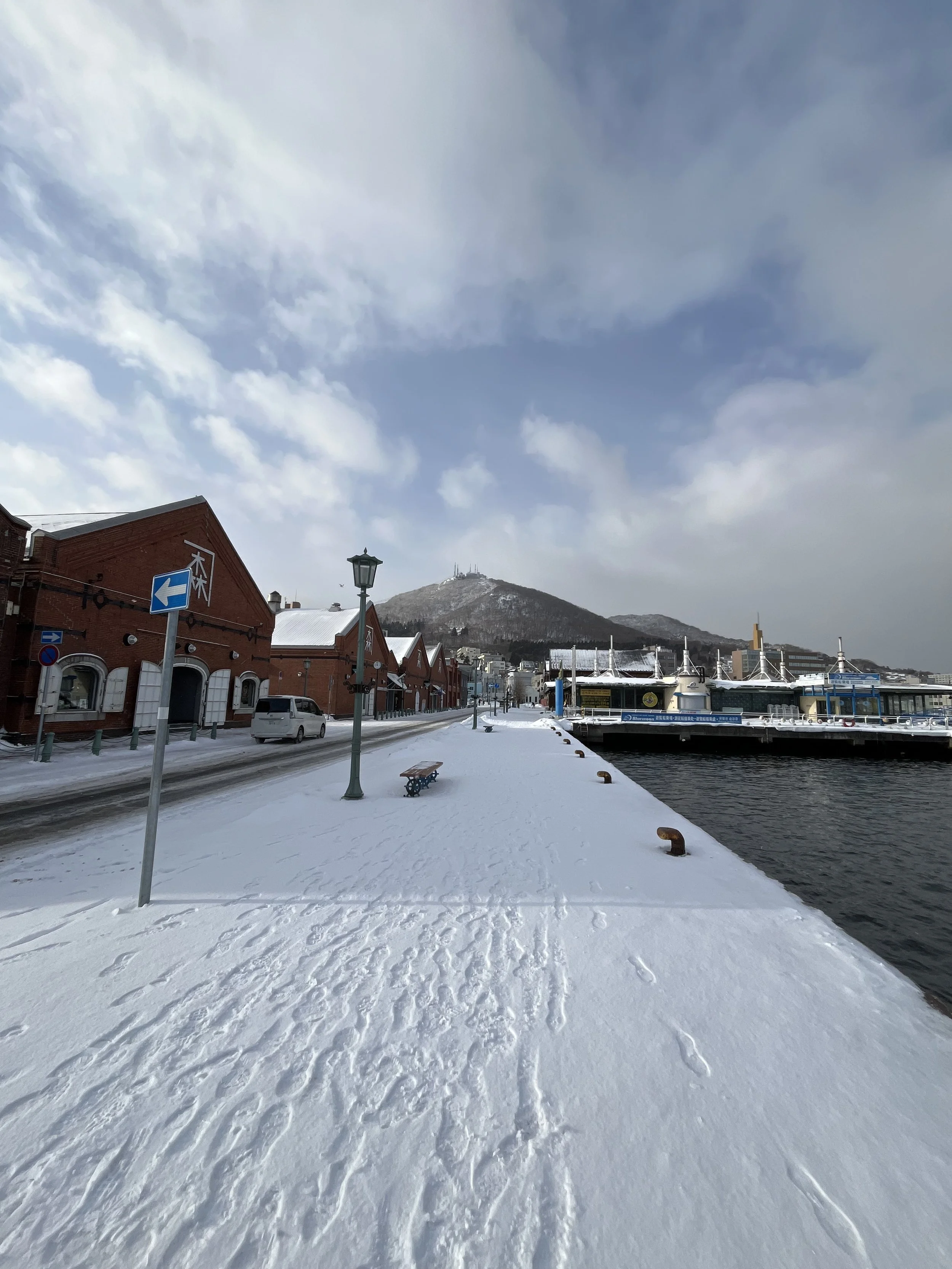
Bay area- In front of Kanemori Red Brick Warehouses
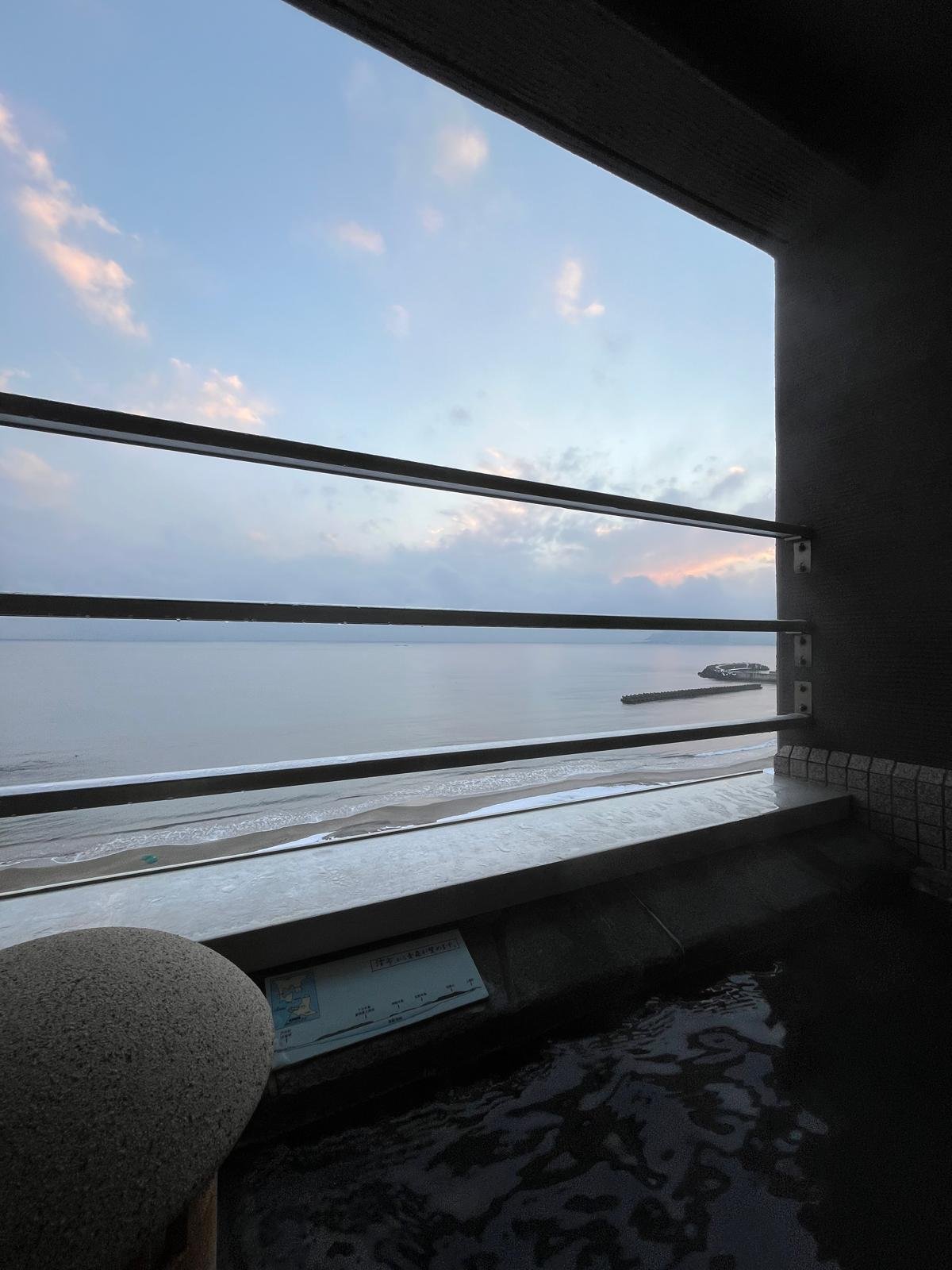
Yunokawa Hot Spring ; Private open air bath in the room